Interiors
NEO‑GOTHIC ARCHITECTURE
Staircase hall
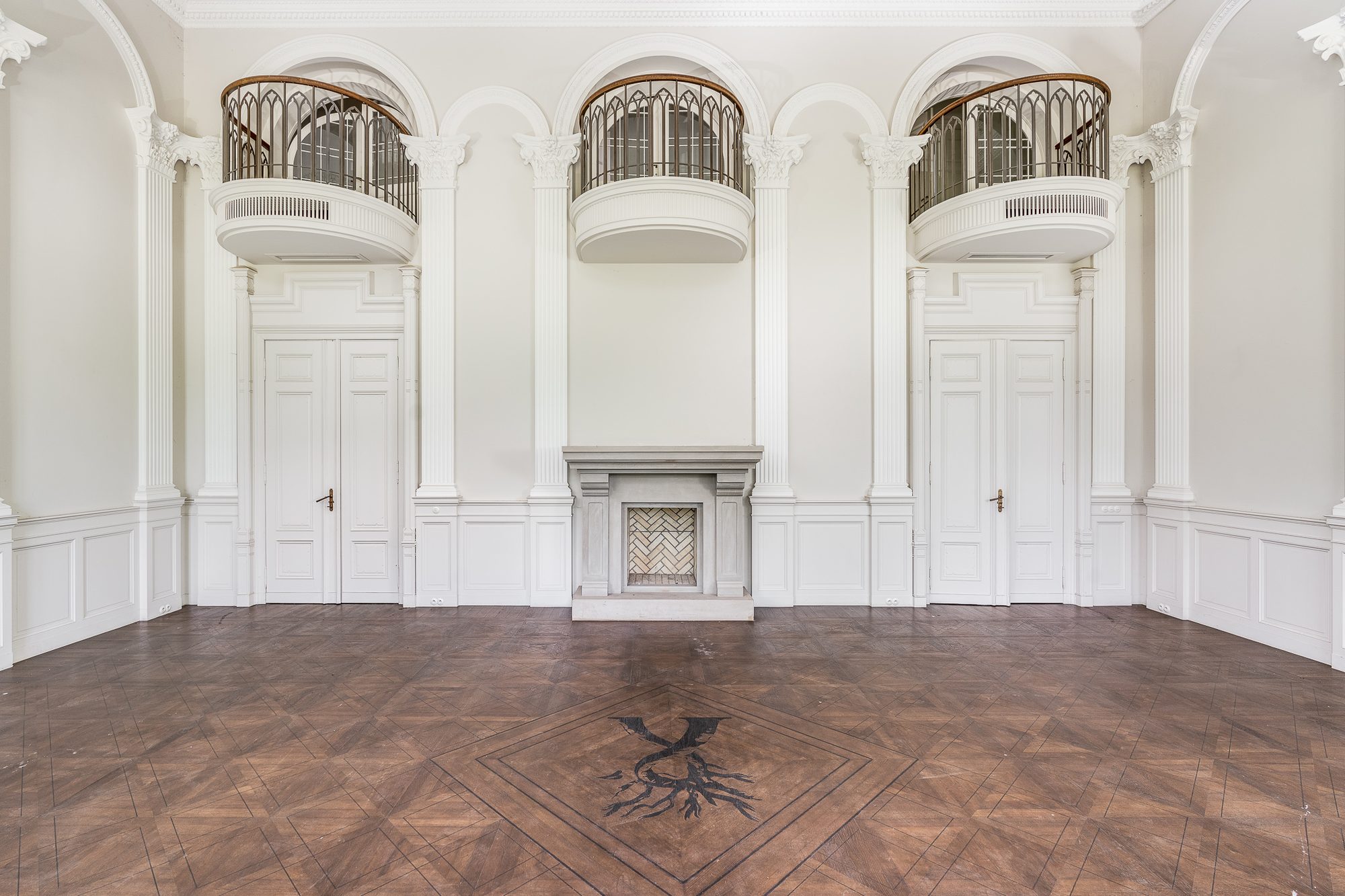
Coat of arms in the floor
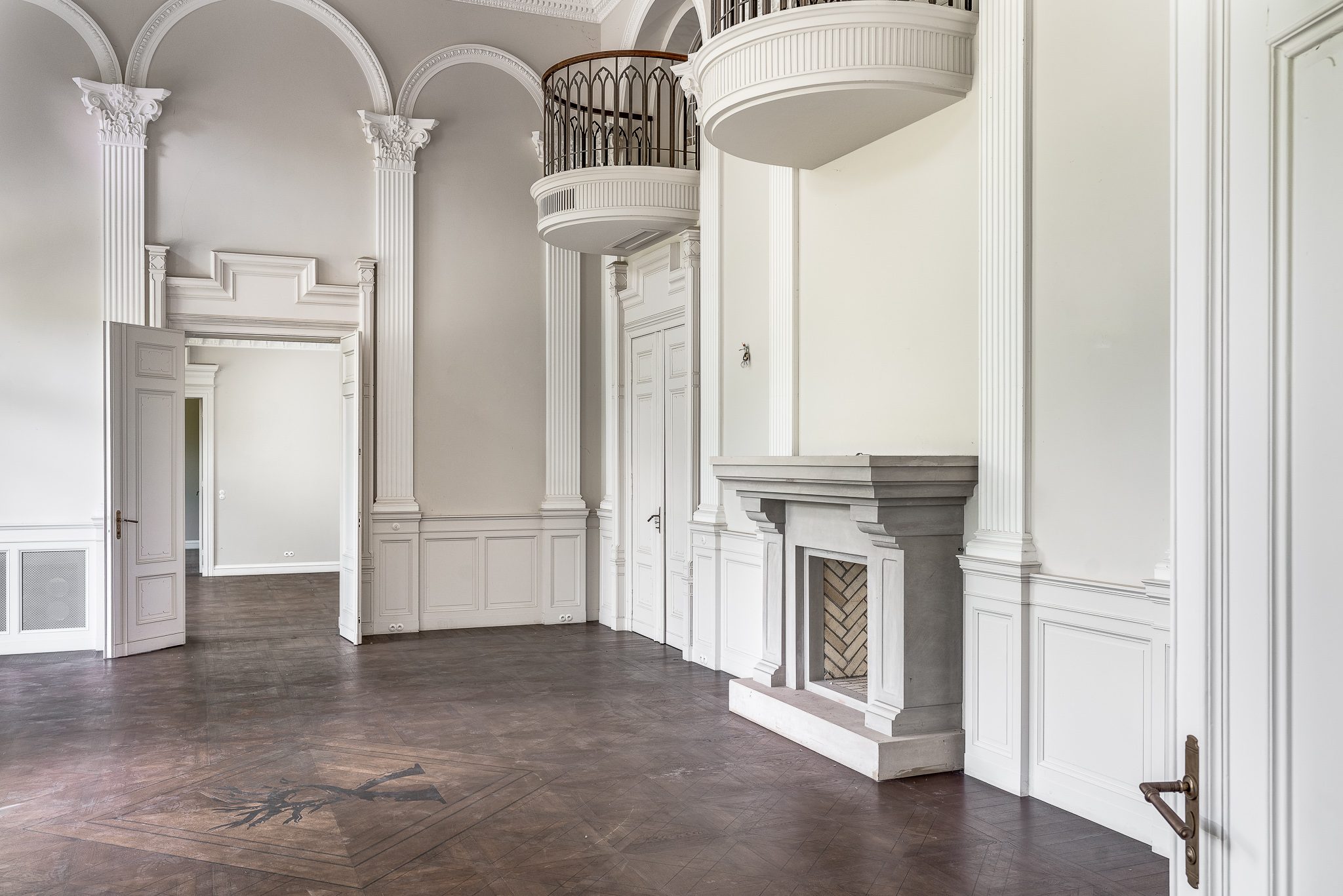
Ballroom
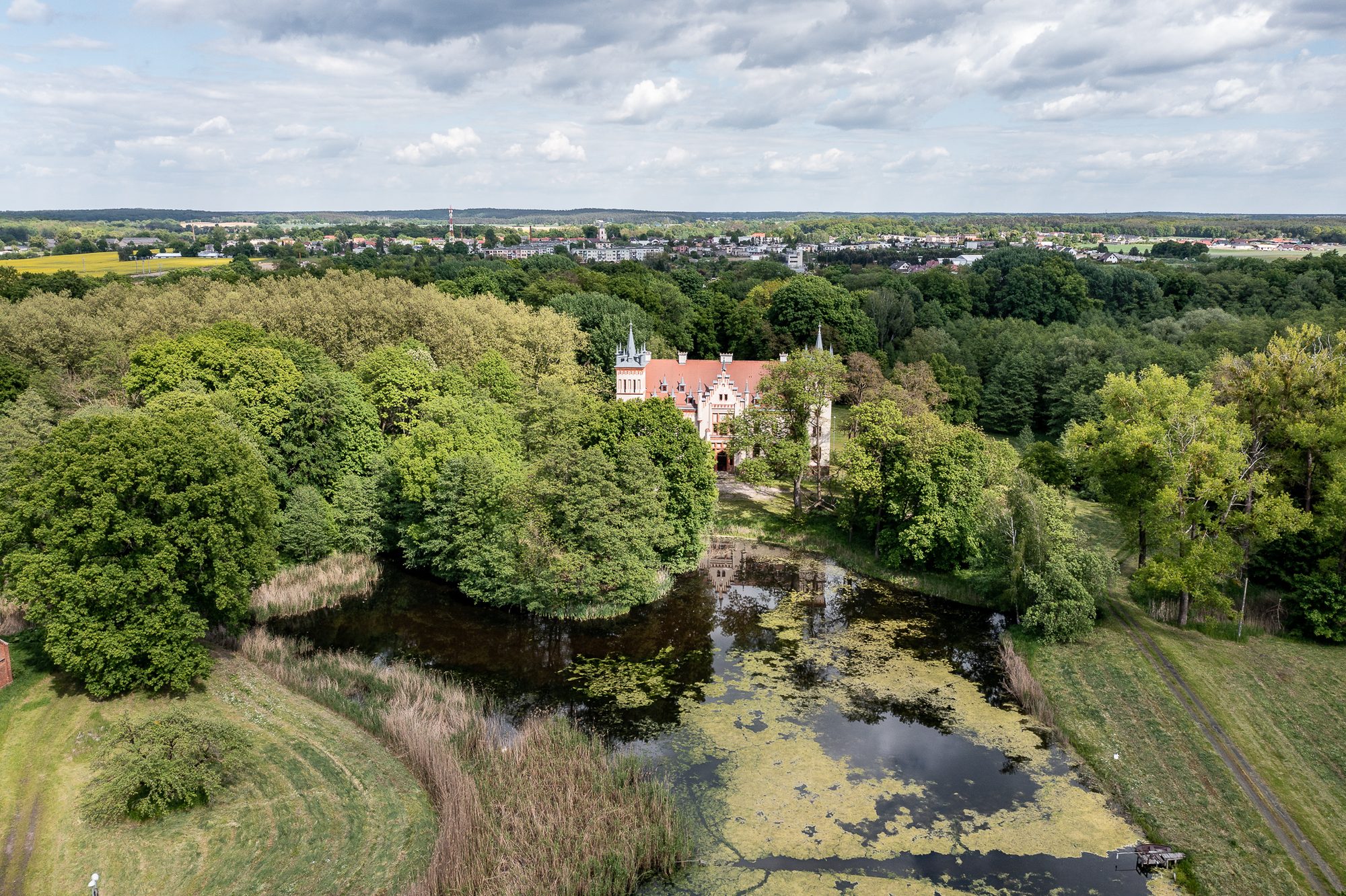
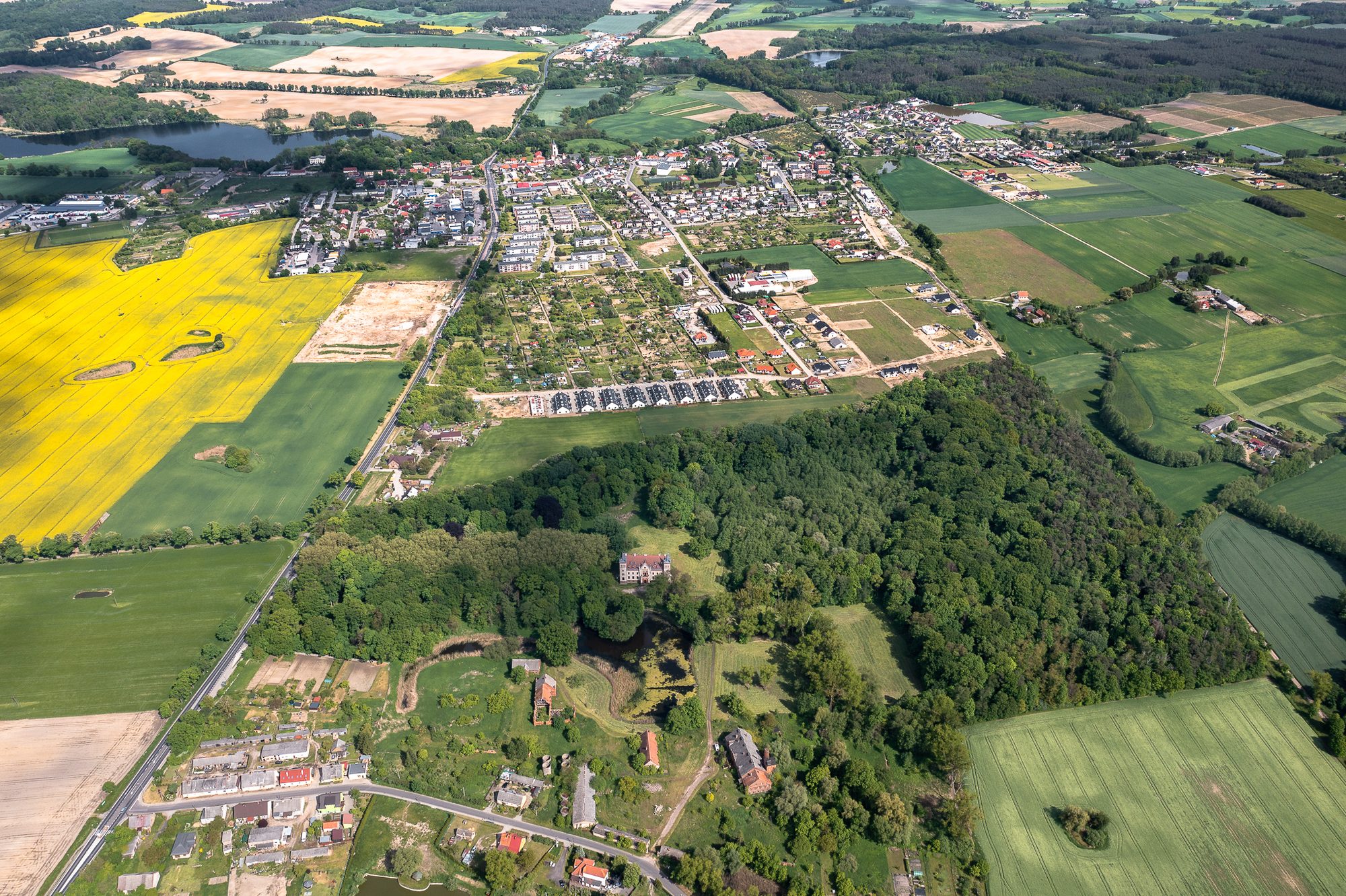
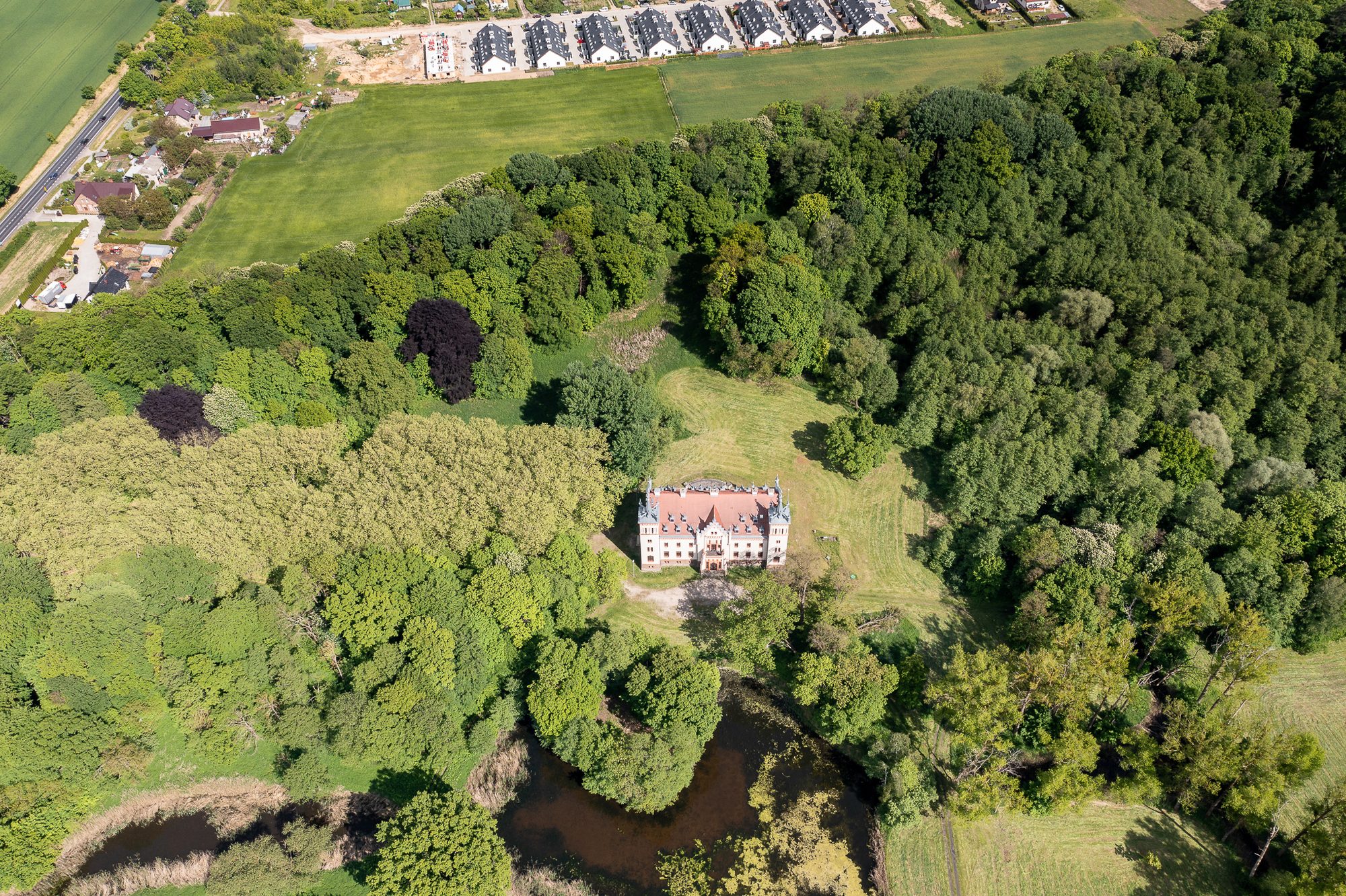
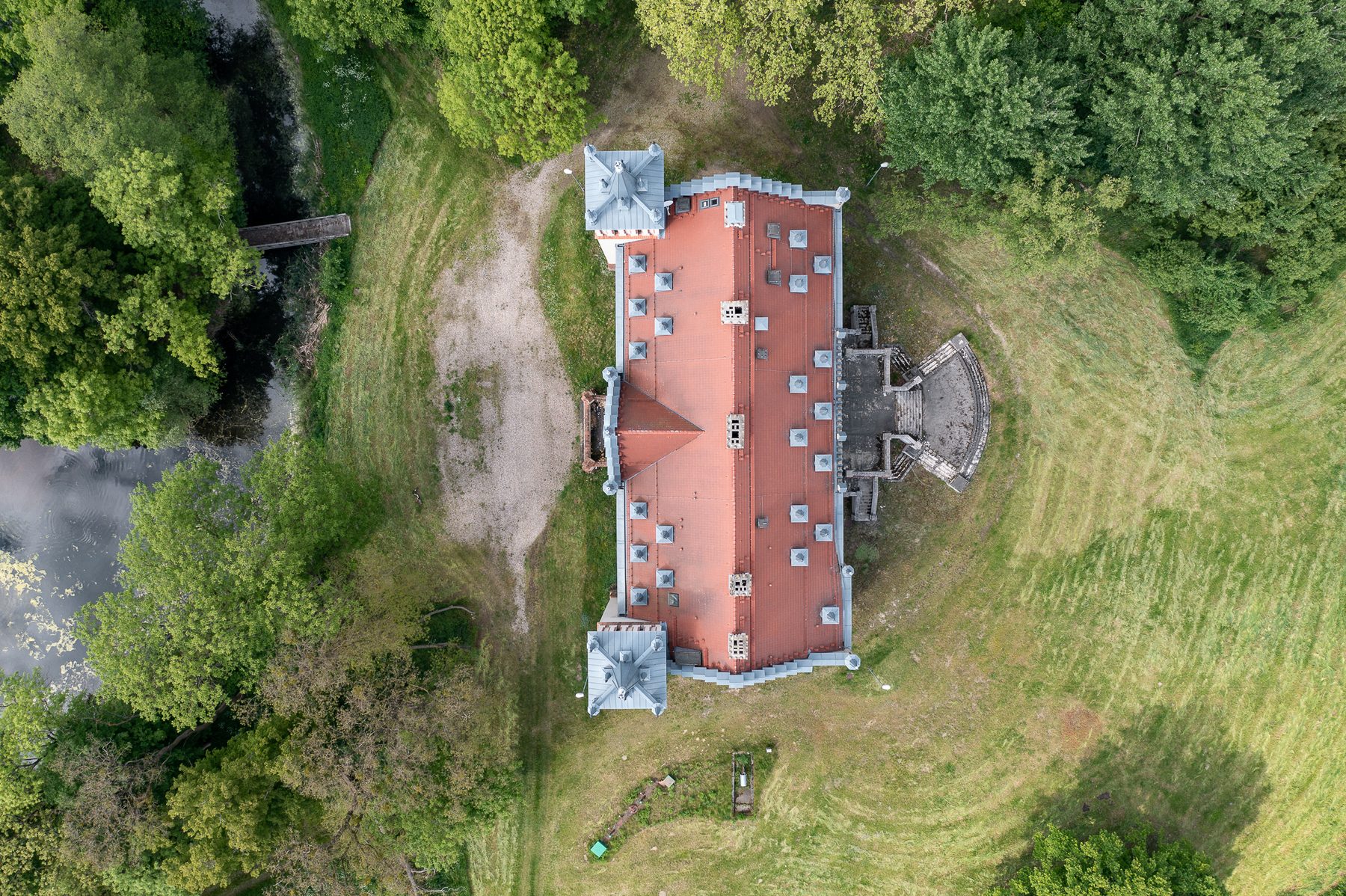
The palace was built between 1856–1858 for Georg Heinrich Otto von Reiche, on the site of the former seat of the Kwilcz and Ostroróg families — a neo-Gothic structure with four storeys, corner turrets and a Tudor-style portico, its façade decorated with the family's coat of arms in stucco. Until 1945 the estate remained in the hands of the von Reiche family, surrounded by a romantic park with a plane-tree avenue considered one of the finest in Greater Poland.
After the war, under state-farm management, it fell into ruin. In 2004 it was bought by Jan A.P. Kaczmarek — composer and Academy Award winner for the score to "Finding Neverland" — who ran the Rozbitek Institute here for a decade: an arts centre inspired by Robert Redford's Sundance, host to the Transatlantyk Festival, concerts, theatre performances and film screenings under its restored roof.
Today, after years of quiet, the palace and its 33-hectare estate await a new owner — with interiors roughly 85% restored, its own IT infrastructure, and a blank programme waiting to be written anew.
Staircase hall
Coat of arms in the floor
Ballroom
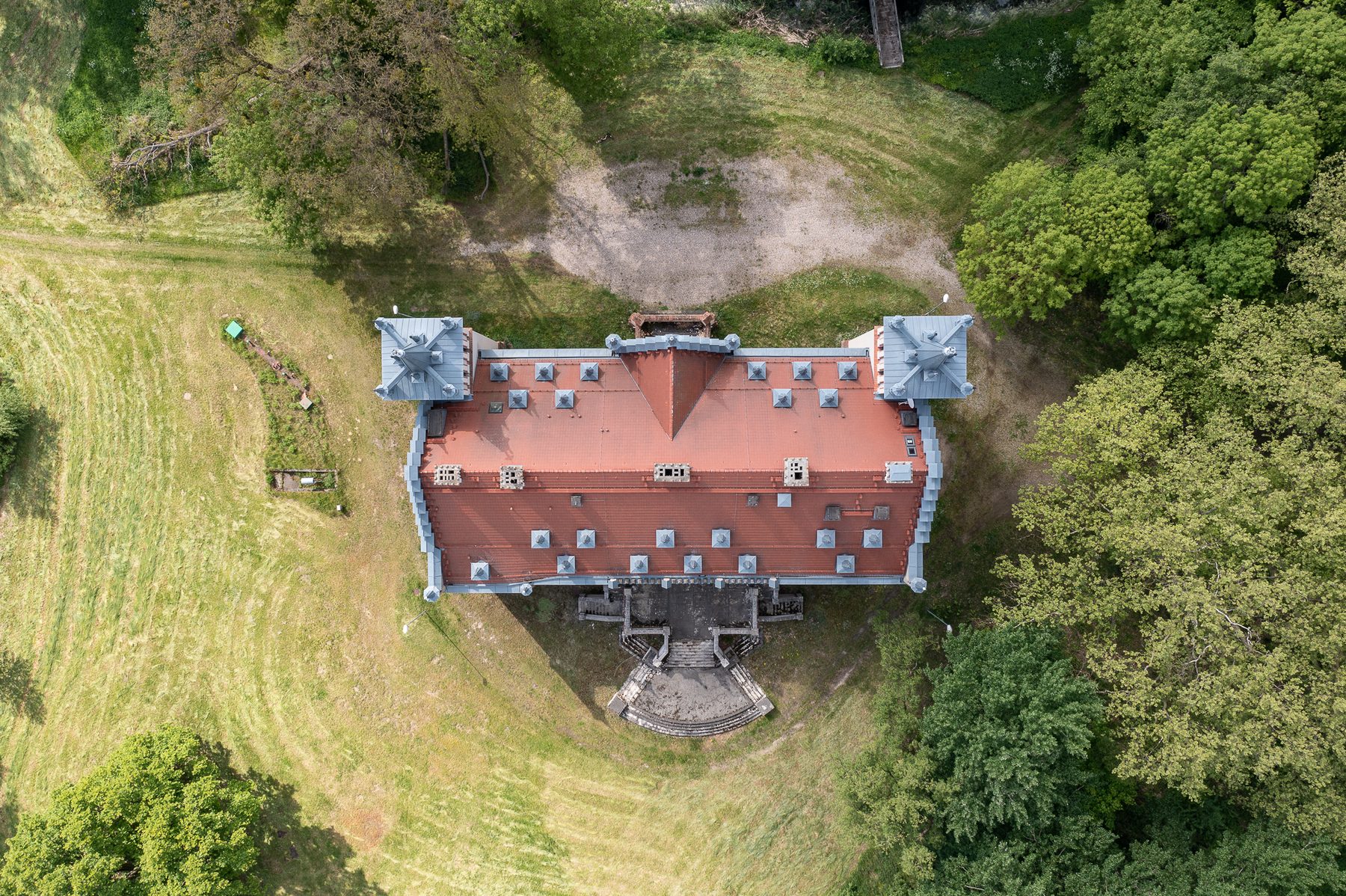
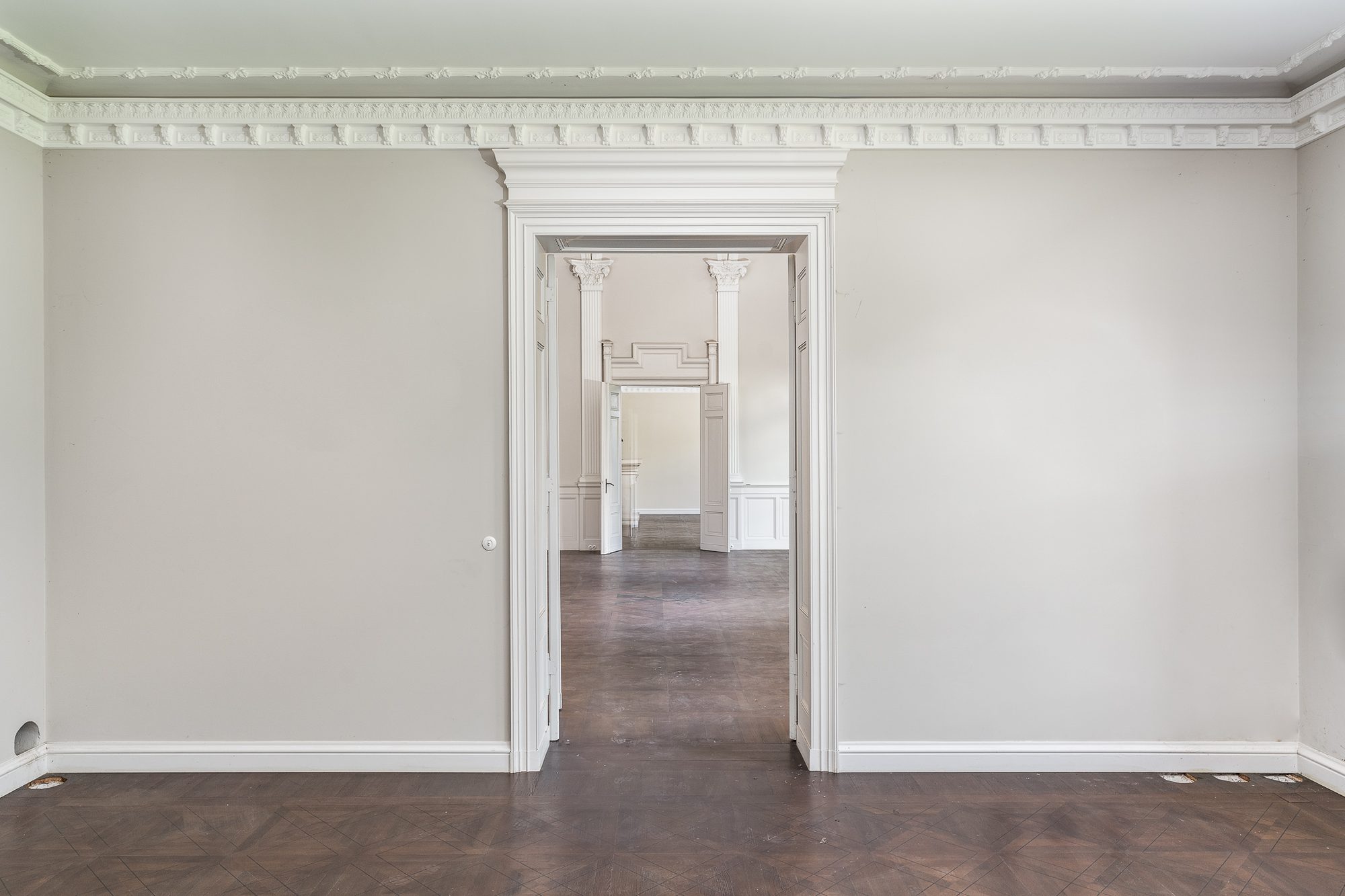
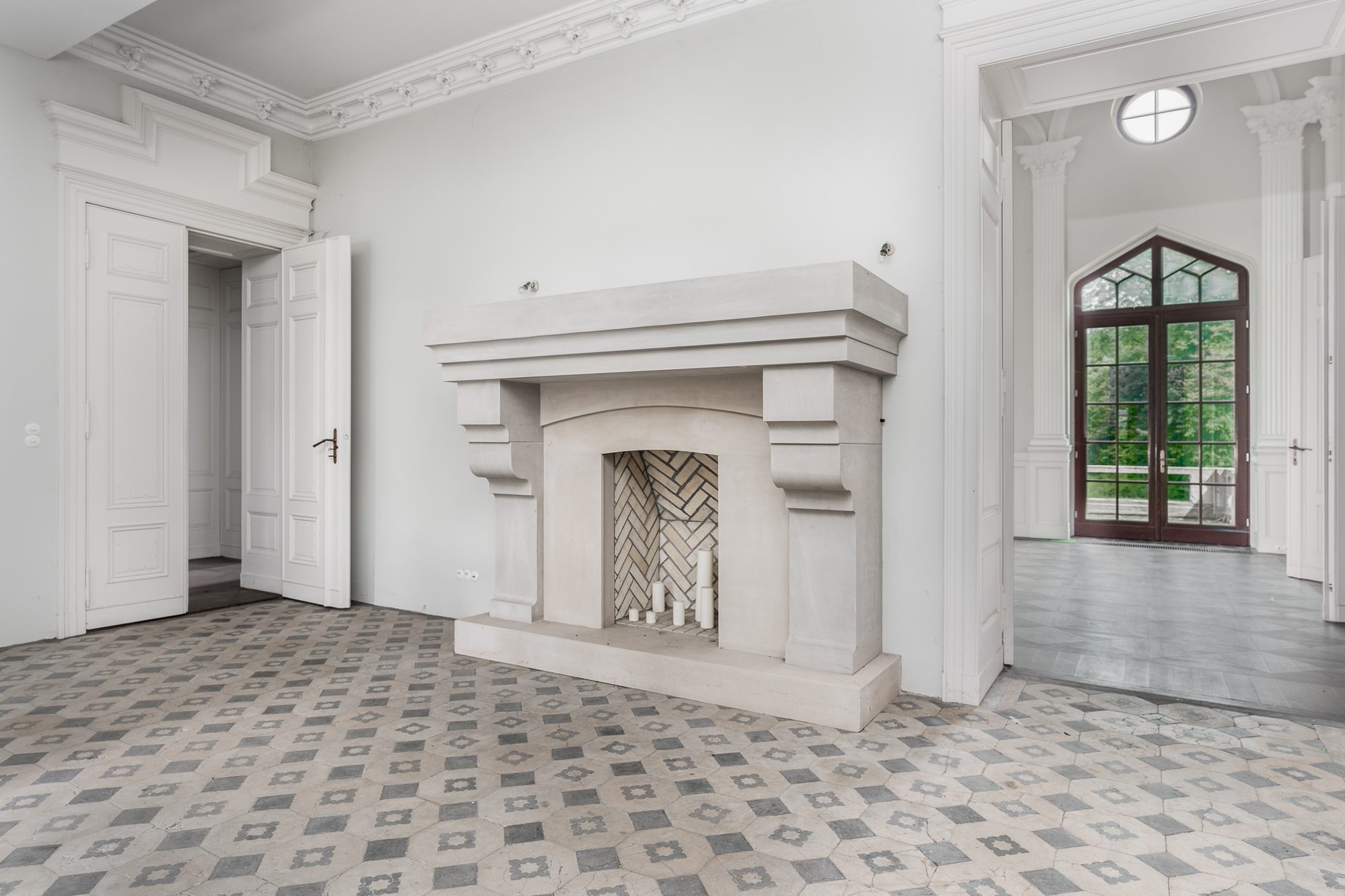

A boutique 5★ hotel with a restaurant in the Gothic cellars and a spa wing in the leisure quarters. Seven reception rooms on the ground floor and four–five first-floor apartments with balconies, the attic reimagined as a banqueting hall. A helicopter pad and the Sieraków stud farm (180 years of tradition) draw guests from Berlin, Poznań and Warsaw — all within 1–3.5 hours.

A return to the site's roots — this time for business. The grand ballroom and three smaller salons as plenary spaces, the attic once used for the Transatlantyk Festival as a creative hall, ready-made IT infrastructure. 33 ha of parkland for corporate retreats from three capitals — no flight, no traffic.

A rare advantage: two lifts (passenger and freight) already connect levels ‑1/0/1 — the most costly barrier to adapting a heritage building is already solved. First-floor apartments with balcony and library as independent living units, the ground floor as shared common space, the park as a rehabilitation ground. 65 km from Poznań — close enough for visits, far enough for peace.

Continuation, not revolution: for a decade the palace already lived on festivals, concerts and screenings. The cellars for an atmospheric restaurant, the ballroom for concerts, a ready-made "black box" in the attic for artist residencies, the park as an open-air amphitheatre. A natural candidate for funding from foundations, local authorities and public‑private partnerships.
The palace sits beside the A2 motorway linking Berlin, Poznań and Warsaw, surrounded by the Notecka Forest and the Land of 100 Lakes. The area is among Poland's best hunting grounds and an equestrian hub centred on the Sieraków stud farm.